
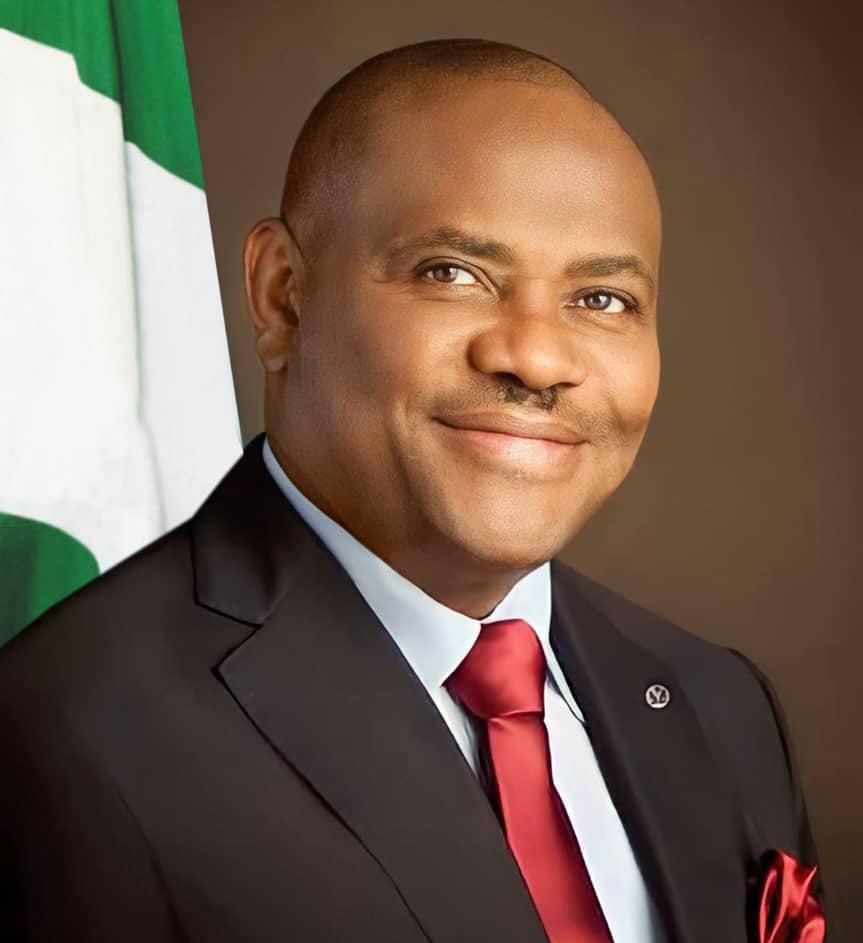
Wike
Nyesome Wike is arguably the enfante terrible of Nigerian politics. He has become the man you hate to love in political circles. To understand him properly, one must deconstruct the myth from the man, the performer from the politician. His bold, often brash style has unsettled allies and opponents alike. He disrupts conventions, shocks sensibilities, and thrives where others retreat. Yet beyond the noise and controversy lies a purpose-driven leader focused on delivering on his assignment.
In private life, those close to him describe a devoted husband and doting father. Sadly, these quieter virtues are eclipsed by a combative public persona shaped by sharp rhetoric and relentless political engagement.
Regarded in some quarters as a political gadfly, he is like the proverbial cat with nine lives for his incredible survival skills, agility, and flexibility, that has helped him survive many political tornadoes and earthquakes. Some politicians have given up on pinning him down and obviously don’t know what to do about him.
However, for residents of the Federal Capital Territory, Wike can be anything to politicians, but he is a problem solver. They have informally crowned him the king of roads construction for the massive roads infrastructure he has embarked upon since becoming the FCT Minister.
He is a “recurring decimal” in Nigerian politics for constantly appearing and reappearing in public discourses, major political events, discussions, and leadership roles over the last twenty five years, influencing outcomes repeatedly that are ordinarily considered impossible.
He has also become a constant topic on television breakfast shows, social media memes, gossip columns, skits, family breakfast table conversations, political meetings, media roundtables.
He has cut a complex ambivalent personality that makes admirers and adversaries, friends or foes simultaneously perceive him differently. To some, he is a gadfly; to others, a bulldozer. Admirers see courage and decisiveness. Critics see overreach and ego. This push-pull dynamic, admiration mixed with irritation, defines his public identity. What makes it even more curious is his often unpredictable nature and actions.
There is rarely a day without a “Wike moment” dominating headlines, whether in party disputes or infrastructure rollouts. His political melodrama has even inspired street anthems. One of the songs, “as e day pain them, e dey sweet us”, became an instant hit.
The different shades of opinion about him simply reflect complex, often contradictory feelings, commonly seen in some public figures who are easily perceived as enigmatic like President Obasanjo and IBB.
However, whether you love him or hate him, one thing you can’t help about “the Port Harcourt boy” sure knows his onions to the extent that he can’t be ignored.
Wike may not have a glittering reputation due to his brash and abrasive political persona, but he has swag in performance. He has cultivated an inescapable presence in the nation’s psyche.
He has shaken the PDP to the point where many of the key stakeholders including his opponent in the 2013 party primaries, Atiku Abubakar, left to join the ADC.
In his state, Rivers State, inarguably one of the three main politically decisive states (the other two being Lagos and Kano) by its voting strength, he decides where the political pendulum swings. At least, in the recent past. He “installed” the incumbent governor and when they had differences, he showed him that he could work the system to issue him a “red card”. This led the governor being out of power for six months until he started “behaving” well before being returned back.
His energy is palpable, his enthusiasm and zeal unstoppable. From when he first made his entry into the nation’s political scene as Chairman of Obio Akpor Local Government Council in Rivers State for two terms, from 1999 to 2007, a period during which he also held leadership positions in Association of Local Governments of Nigeria, ALGON, he had demonstrated that he was a strong man who will later play a prominent role in the nation’s political scene.
His ALGON leadership role marked the beginning of his significant political career nationally, preceding his appointments as Chief of Staff to Governor Rotimi Amaechi of Rivers State, Minister of State for Education during President Goodluck Jonathan’s administration, Governor of Rivers State, and current Minister of the Federal Capital Territory (FCT).
Not a man to walk on eggshells, his bid to walk the talk and effectively discharge his duties in his current assignment as FCT Minister has sometimes driven him over the edge, pitching him against some people who consider themselves “powerful and untouchable“ in the society.
Regardless, he is determined to achieve all the deliverables of his mandate. As Minister of the FCT, he has embarked on the largest intra and intercity road projects since the creation of the FCT 50 years ago.
Under the “Light Up Abuja” initiative, Wike has flagged off numerous road projects in Abuja, focusing on major arterial roads, access roads to key districts and terminals (like Mabushi), and connecting roads for housing projects (like Renewed Hope Cities), including developments on Southern Parkway, Outer Southern Expressway (OSEX), Arterial Roads N1, N2, N5, N16, N20, and rehabilitation of Old Keffi Road, aiming to boost connectivity and infrastructure within the capital territory.
In summary, his massive road projects initiated/underway, cover arterial Roads, expressways and parkways, access Roads, and district Roads. He has rehabilitation and upgraded most of the roads that were hitherto abandoned thereby opening up the city to some of the remotest areas in the FCT.
These road projects are part of a large-scale infrastructure drive by the FCT Ministry to complete stalled projects and build new ones, focusing on connectivity, enhancing transportation, and facilitating the Abuja master plan.
Since becoming the FCT Minister, he has indelibly etched his name in gold for opening up the FCT and expanding its arteries like a “surgeon” with laser beam, and in such a speed that has never been witnessed before in the FCT.
According to the Nation newspaper, since assumption of office as Minister of the Federal Capital Territory (FCT), in August 2023, Nyesom Wike, has swiftly distinguished himself through a spate of transformative infrastructural projects reshaping Abuja’s landscape.
Among his boldest moves is the commissioning of the Southern Expressway, now renamed Bola Ahmed Tinubu Way—a vital artery connecting the capital to the Kaduna-Abuja-Lokoja Federal Highway.
Complementing this is the Wuye Bridge Interchange, which now facilitates seamless movement between Wuye and Wuse I districts, easing traffic in a formerly congested corridor.
Further strengthening urban mobility, Wike launched the Outer and Inner Southern Expressways—10-lane superhighways enhancing east-west connectivity and alleviating pressure on inner-city routes.
He also flagged off Wole Soyinka Way (N20 Arterial Road), a 5.6km stretch with key interchanges at Kubwa and Shehu Musa Yar’Adua Expressways. Infrastructure delivery in Guzape District, including roads, stormwater drainage, and power supply, also points to his focus on opening up underdeveloped areas.
In the transport sector, the commissioning of modern bus terminals in Kugbo and Mabushi and the Apo-Wasa Road project reflect efforts to modernise public transit and reduce congestion.
Although Wike has not specified the exact number of projects in the pipeline, he has cited major ongoing works, such as the rehabilitation of 366 roads in central districts, 120km of rural roads across the six Area Councils, and the streetlight upgrade along Nnamdi Azikiwe Expressway.
Under the stewardship of Wike, one of Abuja’s most vital thoroughfares—the Airport Road—is undergoing a major expansion designed to transform it into a modern, high-capacity expressway.
This intervention is not merely cosmetic; it is strategic. By addressing persistent traffic bottlenecks, the project is set to enhance commuting efficiency for residents and visitors alike, improving access to the city from the Nnamdi Azikiwe International Airport.
Wike, known for his hands-on governance style, is personally monitoring progress to ensure the project’s timely and quality delivery.
More than just expanding lanes, the reconstruction prioritises road safety and urban resilience. New features include clearly marked signage, modern street lighting, pedestrian walkways, and a robust drainage system to mitigate flooding during the rainy season.
These enhancements are geared towards reducing road accidents and safeguarding both motorists and pedestrians. Beyond aesthetics and safety, the economic rationale is equally compelling. Better road infrastructure lowers logistics costs, improves travel time, and boosts investor confidence—factors that are crucial as Abuja positions itself more assertively as a national and regional economic hub.
The Airport Road expansion, therefore, stands as both a physical and symbolic gateway to a more efficient, accessible, and economically vibrant capital city.
He has turned the hitherto hard-to-reach rural communities into peri-urban areas, characterized by a mix of scattered urban development projects such as road and housing infrastructure and rural activities such as farming and rural economic activities. According to the Abuja Inquirer, no fewer than 70 communities in Gwagwalada Area Council have been reconnected to other parts of the area council, following the successful completion of the Paikon Kore-Ibwa road.
The villages situated between Paikonkore and Ibwa communities were reportedly cut off from the other parts of the territory, due to the deplorable road and a dilapidated link bridge connecting both communities.
However, the story has changed with construction of a 9km access road, funded by the Federal Capital Territory Administration.
Recall that the FCT Minister, Nyesom Wike, had in February, 2024, flagged off the construction of the 9km road project with a directive to the contractor to ensure timely completion of the work.
Residents of benefiting communities, who are predominantly farmers, say the road construction has not only opened up their communities, but also help boost their livelihoods as they can now move their farm produce to markets across the FCT.
The Community Liaison Officer on the project, Ibrahim Maikeri, told journalists who were in the communities to get feedback on the project impact, that over 70 communities along that road stretch have been positively impacted by the road construction.
According to him, the Paikonkore-Ibwa road had long been neglected after it was first constructed over 5 decades ago, thereby making it difficult for farmers to sell their products outside Paikonkore due to the deplorable state of the road.
“This road has been in existence even before the creation of FCT, around 1976, but there had been no other maintenance since then and that’s why it was in a deplorable state until it was reconstructed.
“As you can see the state of the road has actually changed. The road was changed because of God Almighty, and because of honourable minister of the FCT, Barrister Nyesom Wike, who has deemed it fit to bring this project down to Gwagwalada, and not only Gwagwalada, but to remember the people of Paikonkore and Ibua community.
“For decades, the road had actually affected the lives of the people here. We were finding it difficult to transport our farm produce to the city centre especially Gwagwalada and its environs. But with the construction of Paiko to Ibwa road, it will enhance interaction between communities and help us in bringing down our farm produce to the markets. It will also help address some of the security challenges we face in the community.”
While also appreciating the FCT Administration for ensuring that the bridge linking both communities was properly reconstructed, Maikeri noted that students from the communities can now easily attend schools in neighbouring villages.
Reacting to the development, the Aguma of Gwagwalada and the Chairman, Traditional Council of Chiefs, Gwagwalada Area Council, His Royal Highness, Alhaji Muhammadu Magaji, commended the FCT Minister for his resilience over the several projects being carried across the FCT.
One of the palace chiefs who spoke on behalf of the Aguma, Umar-Faruk Abubakar, specifically thanked the Minister for picking up projects that were neglected by previous admissions in Gwagwalada.
In his words, “The Paikonkore Road is under Gwagwalada Area Council. We also want to appreciate the Honorable Minister for having said it and done it.
“Years before now, if you are asked to go to Ibwa, you begin to think, are you going to fly or do you need a helicopter to go? But today, in the infinite mercy of God Almighty, as the Honorable Minister of Federal Capital Territory, he has said it and has done it.
“Now in the next 10-15 minutes from Paikon kore, you are already in Ibwa. So there is nothing that is more good than what he has done on that road. So we continue to thank him.”
Wike represents a broader phenomenon in Nigerian politics: the strong-willed executive who prioritizes visible delivery over tons of promises that are never kept and polished media appearances.
The question is not whether Wike is controversial. He undeniably is. The deeper question is whether Nigerian politics rewards performance more than just well-curated media appearances.
In a country where many public offices produce more speeches than structures, a figure who delivers aggressively will inevitably command attention, even if he unsettles the establishment.
Wike may never win a popularity contest among elite commentators. But in the politics of asphalt and concrete, he obviously has no close competitor.
And perhaps that is why he remains the man you hate to love.