

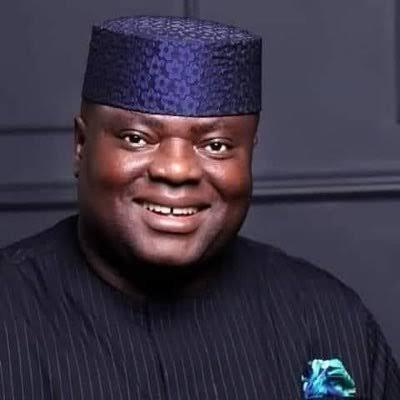
Prof. Onor
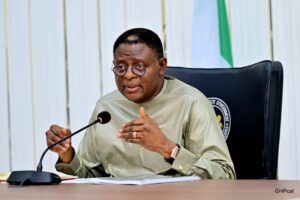
He is a history maker, a student of history, and a teacher of history. And at 60, Sandy Onor, a professor of history, approximates a cultural force in his chosen fields: the academia and politics. He has attained the highest academic achievement of professorship, and also served in the highest lawmaking arm, the Senate of the Federal Republic of Nigeria. What’s more? Presidency? Not impossible. Time will tell.
As a history student in Unical, he made history when he earned a PhD at 27. This is not a mean feat anywhere in the world. It is historic. Sandy studied history under the tutelage of some of the best history teachers in Nigeria including Professors Okon Edet Uya, Erim Odey Erim, Geofrey N. Uzoigwe, Monday B. Abasiattai, Monday E. Noah among others. Sandy’s outstanding brilliance and excellence as well as graduating top of his class earned him an automatic employment offer by the University of Calabar as Graduate Assistant in 1987.
This was when universities still had the policy of retaining its best products as an insurance for a future of continuity in the tradition of excellent scholarship. Although he had multiple other employment options that had better economic prospects, he chose to teach.
With encouragement and support from his professors, he enrolled almost immediately for an M.A. programme in the same Department. Just barely a year into the programme, he was advanced to the Ph.D programme on account of his outstanding performance and aptitude for independent research. He successfully completed the Ph.D. programme in 1993 at the age of 27. Since then, he has taught generations of students, supervised numerous theses, and mentored scholars some of whom have gone ahead to become professors like him.
Around this time, politics beckoned. With a PhD already secured, venturing into politics was a calculated risk. He had a solid fallback in academia and viable opportunities in journalism, international organisations, research institutes, or foreign service. Politics was not a survival strategy as it was for many others. It was a choice.
When he eventually made a foray into partisan politics and contested elections, he made a mark there. It’s from Sandy Onor that I fully understood the assertion that politics is pivotal to every aspect of development. This is because politics is the platform that determines how resources are distributed, policies are formulated, and societal goals are pursued. While economic growth is often the goal, the trajectory of that growth is largely dictated by the quality of political leadership, stability, and governance. It’s perhaps his early understanding of this fact that drove him quite early into politics. Whenever he stepped away from political office, he returned to the classroom. Academia remained his anchor.
This raises an important question for young Nigerians in politics today: What is their fallback? What professional foundation cushions them if elections fail? Or must they endlessly linger in the corridors of power seeking appointments?
Sandy Onor represents a fast-vanishing clan of intellectuals in public service. Before him were figures like Dr. Bala Usman, Dr. Iyorchia Ayu, Dr. Mathias Offoboche, and more recently, Senator Victor Ndoma-Egba.
Few contemporary politicians possess Professor Onor’s intellectual depth. Twenty years ago, when he turned 40, he launched his seminal book on local government administration at an epochal event that gathered the crème de la crème of Cross River society. At 60, he has added another significant contribution to Nigeria’s political literature with The Foundation of Nigeria’s Unity, a work that argues that Nigeria’s unity predates colonial amalgamation.
His intellectual vigor, combined with his gift of oratory, earned him admiration in the Senate. Former Senate President Ahmed Ibrahim Lawan reportedly advocated that he be crowned the “Orator of the Nigerian Senate.” His speeches evoke memories of the great parliamentarians of the First and Second Republics—Nnamdi Azikiwe, Obafemi Awolowo, K.O. Mbadiwe, Ahmadu Bello, Maitama Sule, and Okoi Arikpo, men whose words shaped national consciousness.
Sandy didn’t get to this enviable point by accident. Providence and hard work propelled him. He navigated a lot of rough patches on the way. He defied a lot of odds. So, now that Prof. Onor is 60, what lessons can young people in Nigeria aspiring to get into political leadership learn from him?
So what lessons can young Nigerians aspiring to leadership draw from his life? Can his life serve as a learning curve for them?
In recent years, politics has become a survival mechanism for many unemployed youths. For those who resist crime and cyber fraud, politics often appears the only viable path. Some become political thugs; others align with cult groups during elections; a few survive on patronage.
What has the Nigerian state reduced its youth to?
Will we return to an era when brilliant young minds can confidently pursue careers in academia, banking, journalism, engineering, or law without seeing politics as their only escape? Can Nigeria repair the psychological damage inflicted on its youth over decades?
A major challenge is structural decay and the weaponisation of poverty. In the 1980s and 1990s, the African Writers Series shaped literary consciousness in secondary schools. WAEC was highly competitive across West Africa, pushing students toward excellence. Today, educational standards have eroded.
Public office was once held in trust; now prebendalism, Richard Joseph’s term for treating state offices as entitlements for personal enrichment, that of their families, and also of a few of their friends, dominates.
Over 100 million Nigerian youths are multidimensionally poor, idle, or underemployed. Inflation worsens their plight. Universities suffer strikes, poor funding, and decaying infrastructure. Insecurity and banditry threaten both mental health and productivity.
Yet there is a silver lining. Young Nigerians are leveraging digital tools for accountability and innovation. Just a few days ago, civic pressure compelled the Senate to reconsider its position on electronic transmission of election results, strengthening electoral transparency. The Nigerian senate, under the pressure of young activists, rescinded its earlier position, which had rejected the compulsory electronic transmission of results from polling units to the Independent National Electoral Commission’s (INEC) Result Viewing Portal (IREV). The Senate has now amended the Electoral Act to permit the electronic transmission of election results, leaving safeguards to address potential technical challenges.
The central question remains: Can the Nigerian state rebuild an environment capable of nurturing excellence again for a generation that has been so badly debased? Can it create conditions that will produce many more Sandy Onors,
men and women grounded in scholarship, disciplined by profession, and guided by intellect in public service?
History is kind to those who prepare for it. And perhaps the greatest lesson from Sandy Onor’s life is this: build substance before venturing into politics and seeking power.









By Kammonke Abam